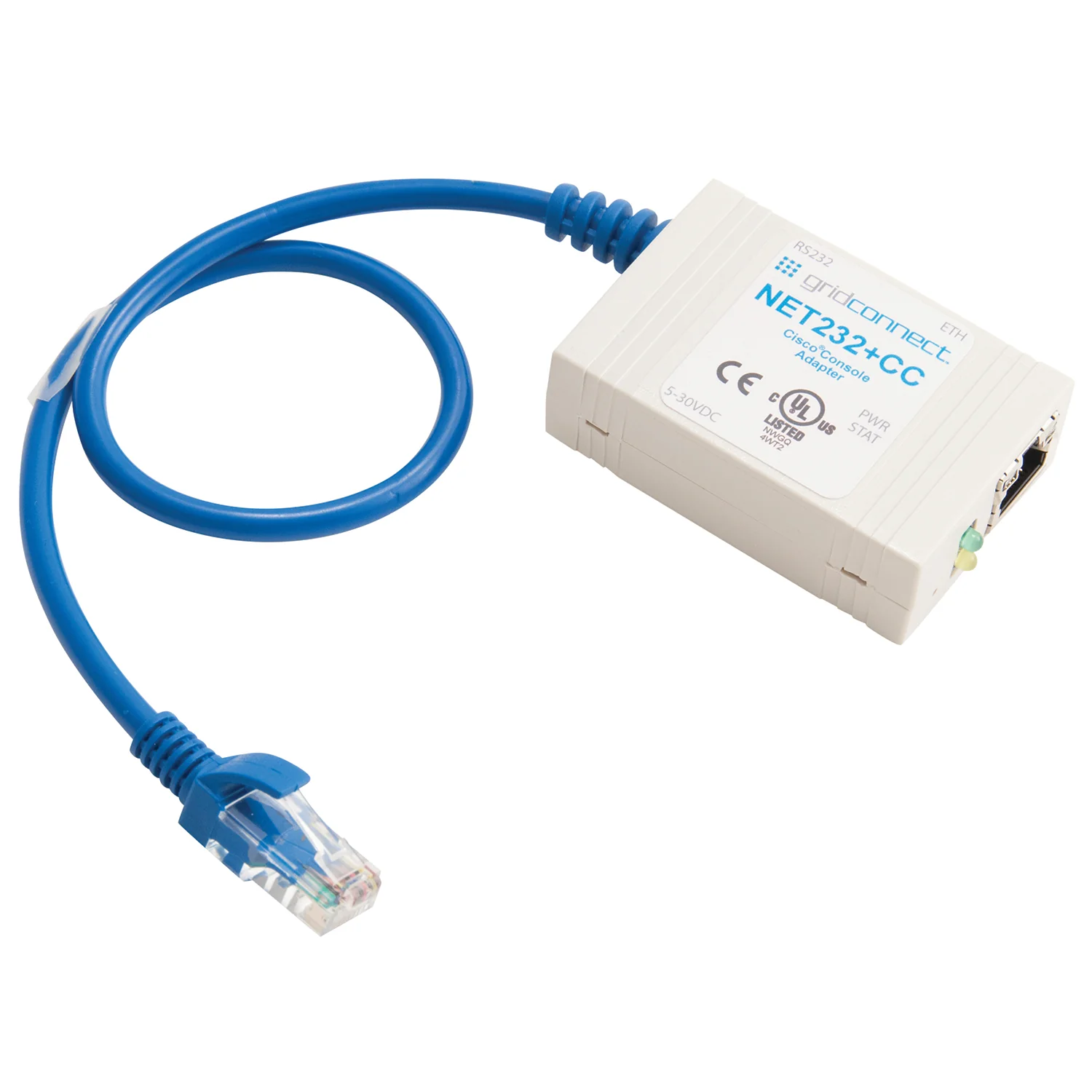
Product Overview
The Serial to Ethernet Converter enables devices equipped with a traditional serial interface (such as RS‑232, RS‑422, or RS‑485) to be accessed and controlled over an IP/Ethernet network. It translates serial data signals into TCP/IP packets (and vice‑versa), allowing legacy equipment to be integrated into modern network infrastructures. This makes remote management, monitoring, and control of serial‑based hardware feasible over LANs, WANs, or even the Internet.
Seamless Integration of Legacy Devices
By converting serial communication protocols into Ethernet‑compatible packets, this adapter bridges the gap between older equipment and current networking standards. For example, a barcode scanner, POS terminal, PLC, or serial console device that only supports RS‑232 can be connected via this converter and appear as a network‑accessible device—virtually as if it were locally connected.
Network‑Ready Functionality and Versatility
Most converters support key features such as virtual COM port software (so the serial device appears as a local COM port to a PC), DHCP/static IP configuration, Ethernet (10/100/1000) connectivity, and support for protocols like TCP, UDP, and sometimes HTTP/SSH for configuration. They may also support RS‑232/422/485 for flexible configuration depending on the device and distance requirements.
Robust Build & Industrial Suitability
Many models are built for industrial environments, offering wide‑temperature operation, surge protection, DIN‑rail mounting, PoE (Power over Ethernet) support, and support for multiple serial ports (e.g., 1‑port, 2‑port, 4‑port versions) for monitoring and control in factories or data centers.
Benefits and Use Cases
Remote access: Enables serial devices to be accessed over network from remote locations.
Reduced cabling: Replaces long physical serial cables with Ethernet infrastructure.
Modernization: Allows legacy serial equipment to interface with modern network systems without full device replacement.
Scalable deployments: Multi‑port converters let many serial devices share a network connection, improving manageability and reducing hardware footprint.
Choosing the Right Adapter
When selecting a serial‑to‑Ethernet converter, important factors include:
Serial protocol supported (RS‑232 vs RS‑422 vs RS‑485)
Number of serial ports needed
Baud rate compatibility and handshake support
Configuration interface (web UI, telnet, virtual COM software)
Power requirements (e.g., PoE vs external power)
Operating environment robustness (industrial vs office)
General Specifications (Typical)
Function: Converts Serial (RS‑232 / RS‑422 / RS‑485) ↔ Ethernet (TCP/IP)
Serial Ports: 1‑port, 2‑port or more versions
Ethernet Interface: RJ‑45, 10/100/1000
Power: External adapter or PoE (depending on variant)
Use Case: Industrial control, remote device management, legacy equipment networking
Integrate your legacy serial hardware into a modern network with a Serial to Ethernet Converter—transform RS‑232/422/485 devices into IP‑accessible endpoints. Ideal for remote control, industrial systems, and network modernization.